QURAMA
1959 national kit
25 000 ₸
1959. The year Kazakhstani football gained a federation.
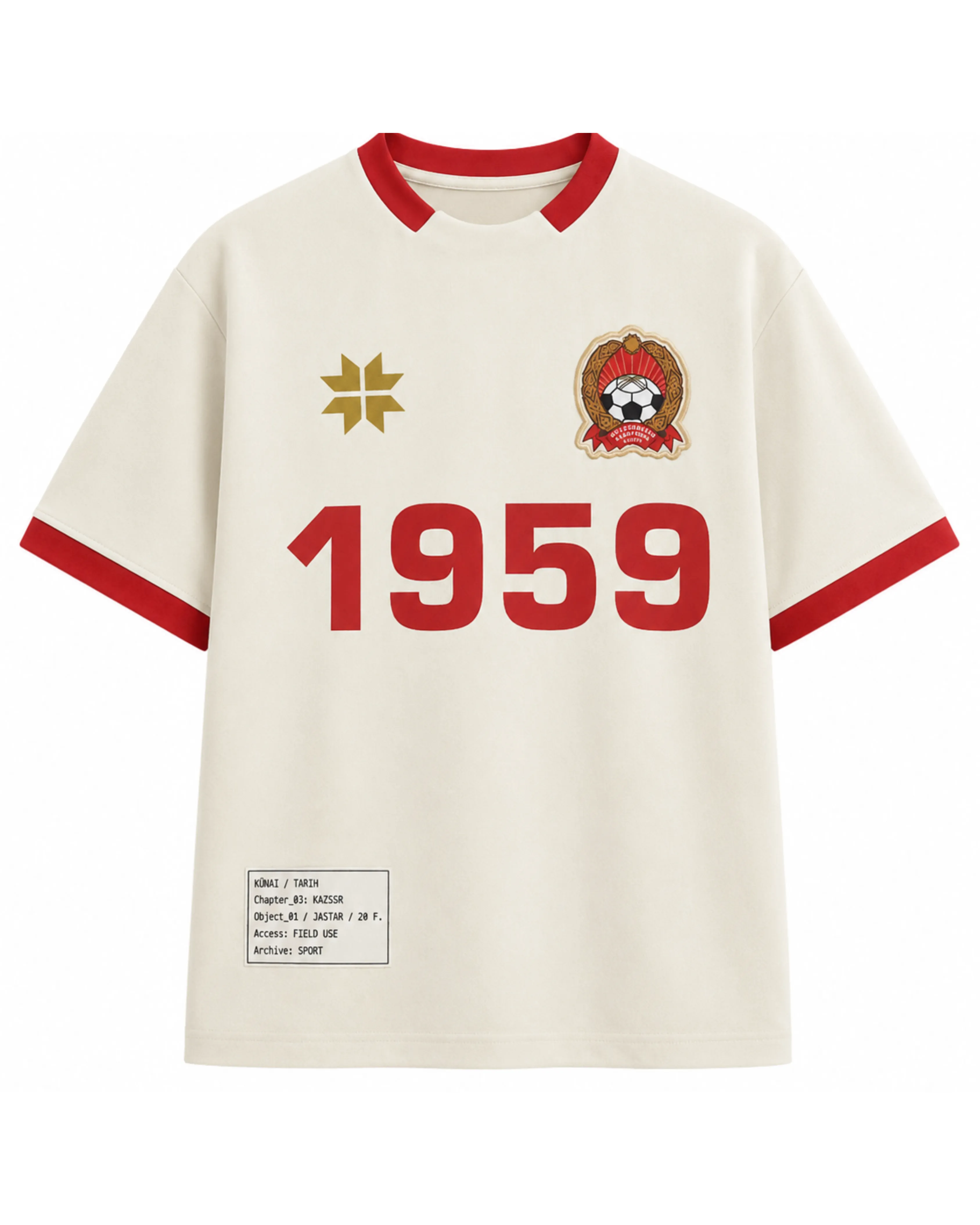
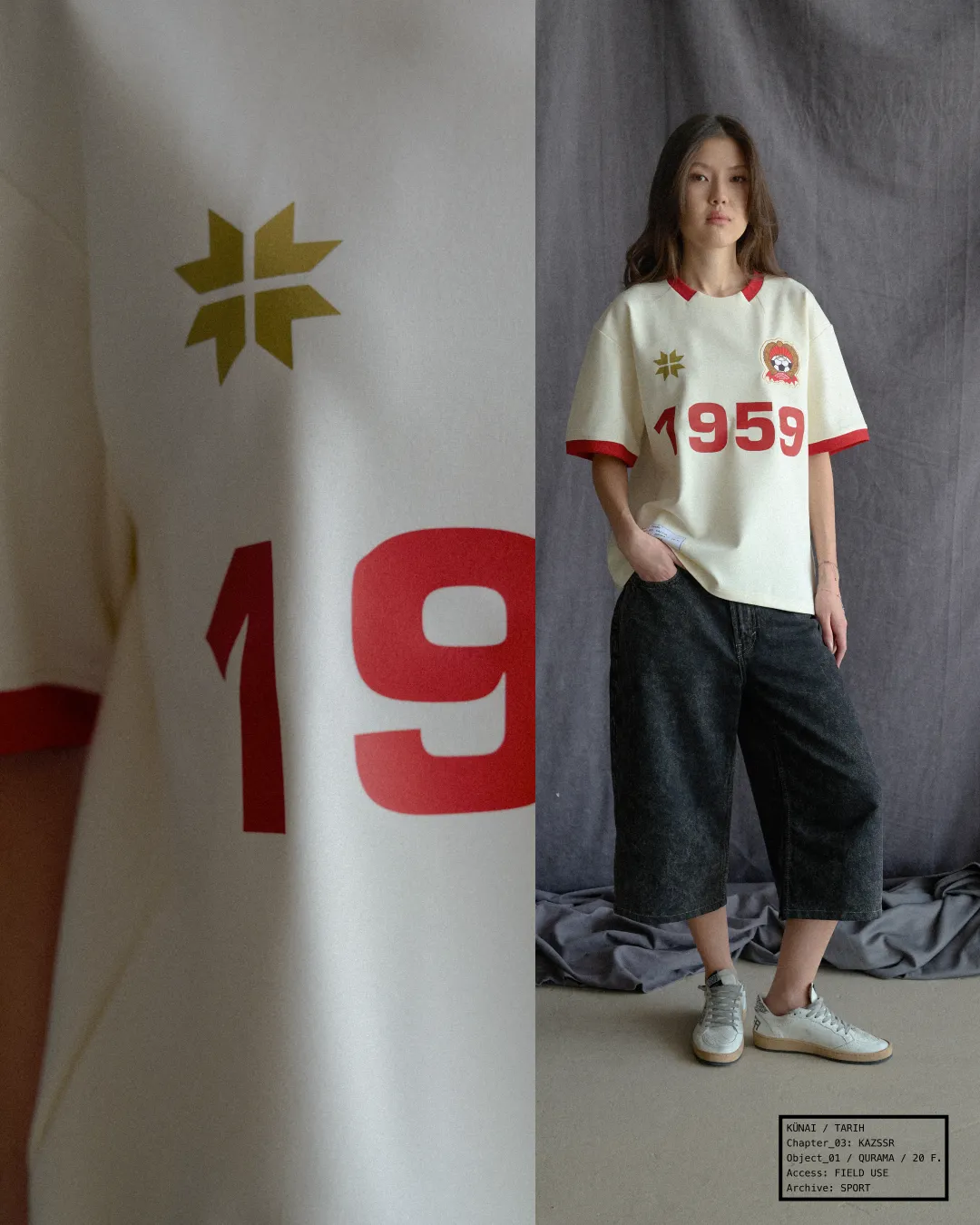
An alternative kit for the Kazakh SSR national team, as it might have been had the republic been sovereign. The star is a Kazakh ornament.
Size chart
| Size | Shoulders | Sleeve | Chest | Length |
|---|---|---|---|---|
| S | 50 | 23 | 52 | 63.5 |
| M | 52 | 24 | 56 | 65 |
| L | 53 | 25 | 58 | 66 |
| XL | 53.5 | 25 | 60 | 66.5 |
garment measurements, cm
In the «Soviet» part of the collection KÜNAI turns to sport as something the ancestors could truly take part in; football was present in Kazakhstan from 1913, and the Kazakh SSR Football Federation was founded in 1959, bringing Kazakhstan football into the all-union system as an independent subject.
Inspired by the USSR national team, a visualization of how a sovereign Kazakh SSR kit might have looked: the era's palette, the date 1959, and a Kazakh star ornament in place of the Soviet one.
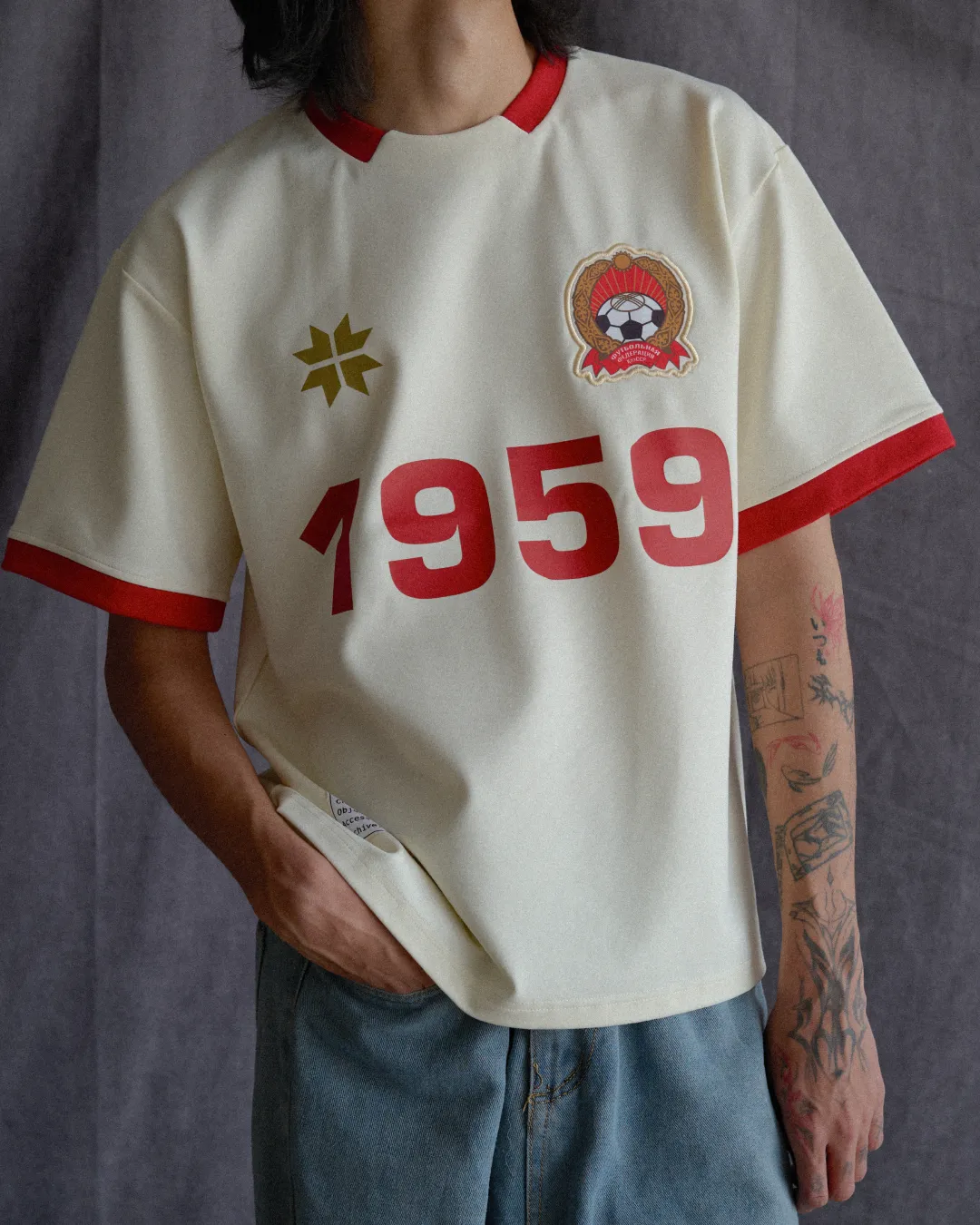
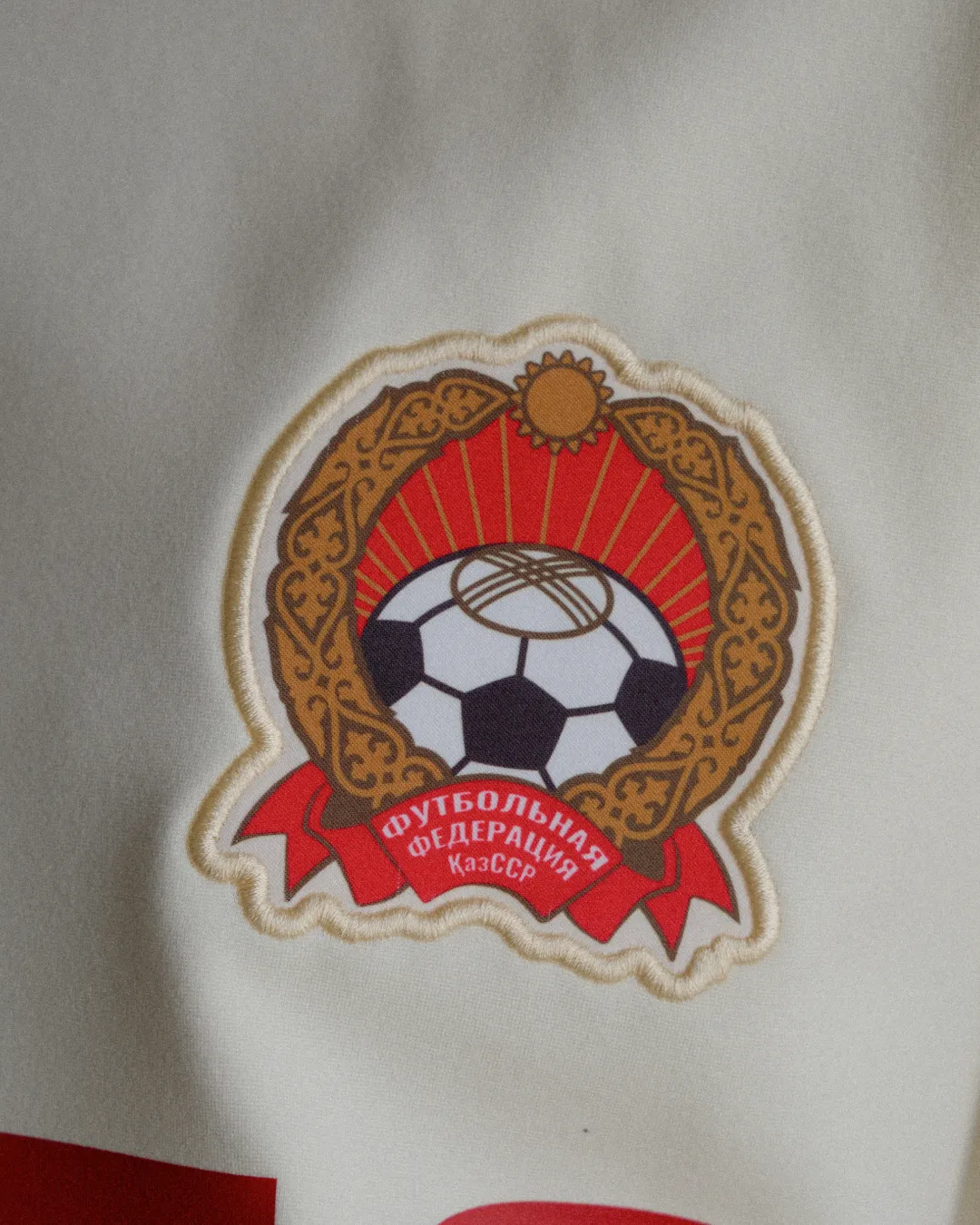
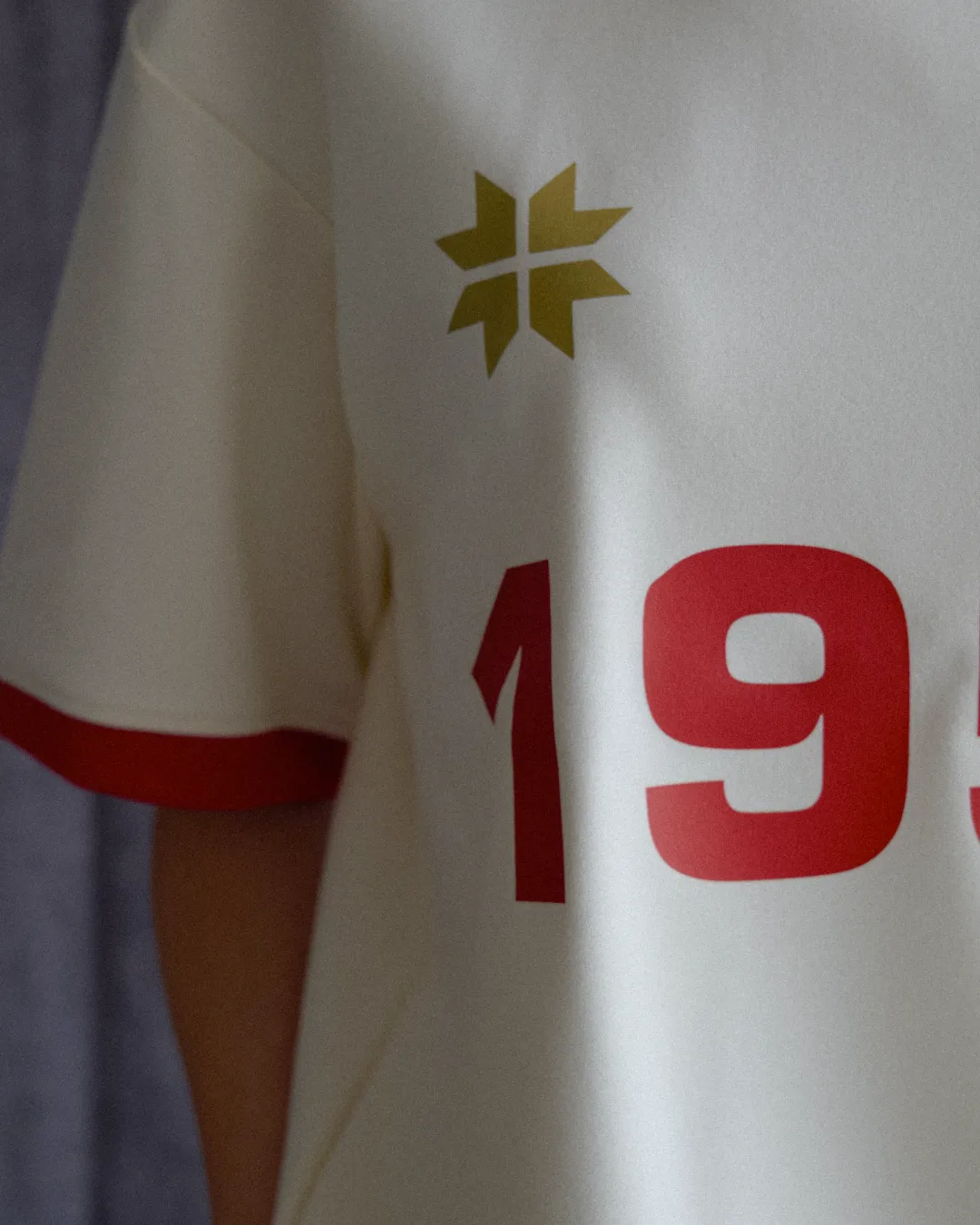
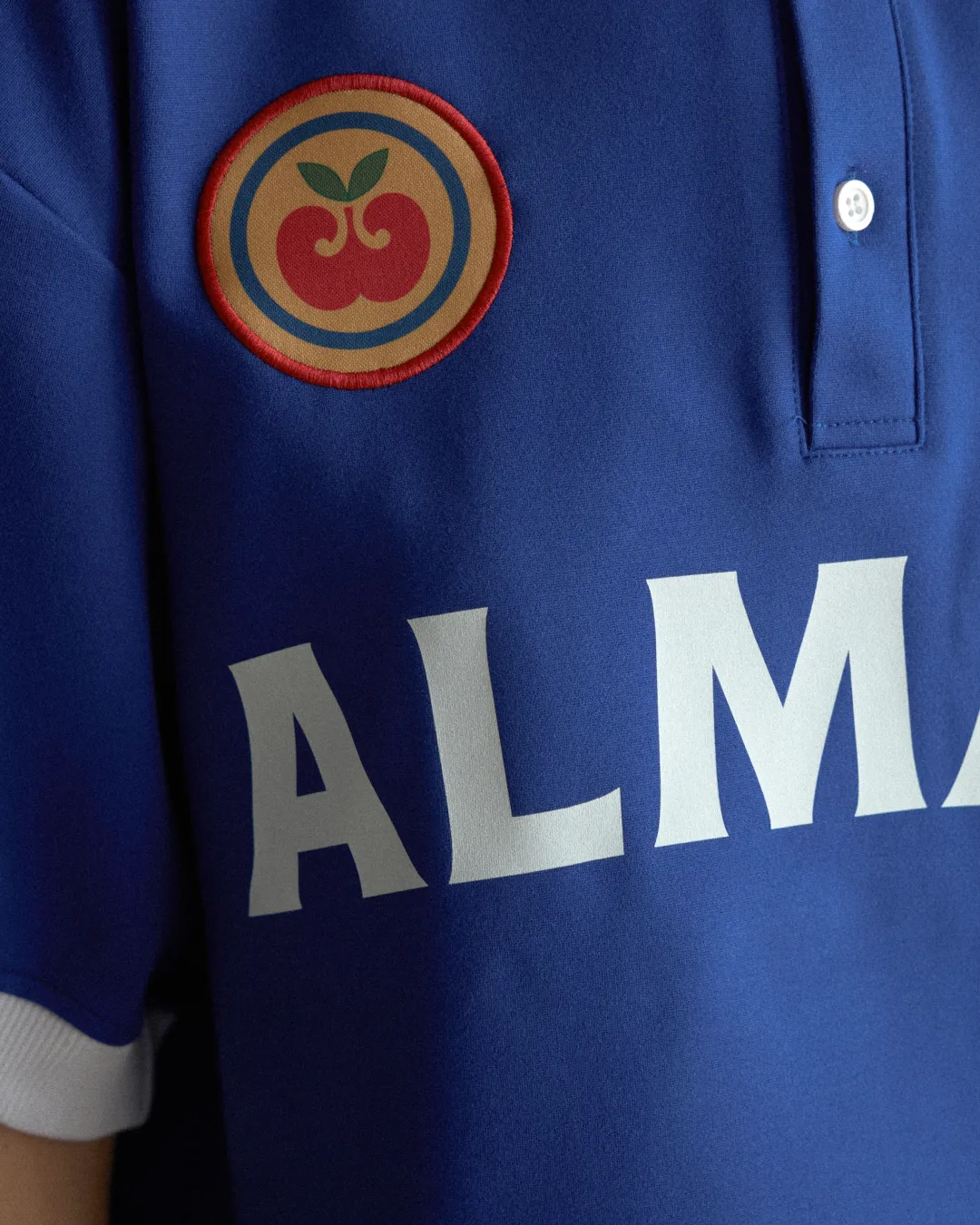
An ivory shirt with a red collar and cuffs, a large КССР inscription, an embroidered Kazakh SSR football federation crest, the date 1959, and an ornament star; in the style of late-1950s sports kits. This is a fictional uniform. Any resemblance to existing clubs, names, or symbols is coincidental.


QURAMA
Source
The Soviet era is, for understandable reasons, always contested territory. And at the same time an inseparable part of Kazakhstan’s history. If the collection has one central idea, it is this: history is not about ideology and not about justice. History is what our ancestors lived through, and it is their presence in it that we can always value. So in the «Soviet» part of the collection we turned to what they could certainly take part in, to sport. They did not need to be major politicians or to stand at the epicenter of turning-point events. They could simply be in the moment: move, keep fit, enjoy life, while history ran its course around them.
The choice fell on football, the beautiful game. Football was present in Kazakhstan from 1913 and passed through the eras into Soviet times. Teams arose across the country: they were assembled by trade unions, army structures, factories, and collective farms. The Kazakh SSR’s own Football Federation was founded in 1959.
Soviet time for Kazakhstan holds two truths at once, and both are real. On one side, the famine of 1932–33, the livestock requisition campaign, the latinization and cyrillization of writing, the closure of the mektebs, the loss of whole generations of the intelligentsia. On the other, the first universal literacy, industrialization, a network of roads and cities, the urbanization of the native population, the entry of Kazakhs into the engineering and scientific schools that were new to them. We do not choose one of these truths: we acknowledge both and look in them for what our ancestors actually lived through.
Sport in the USSR was not merely leisure but a built infrastructure. The voluntary sports societies (DSO), «Dinamo» for the security organs, «Spartak» for the trade unions, «Lokomotiv» for the railway workers, «Torpedo» and «Krylya Sovetov» for the factories, formed a parallel map of the country on which each person held their place. The football team of a factory collective is at once about leisure, about belonging, and about a form of citizenship. In the Kazakhstan context it was precisely such teams, factory, miner, railway, that became the first mass school of football.
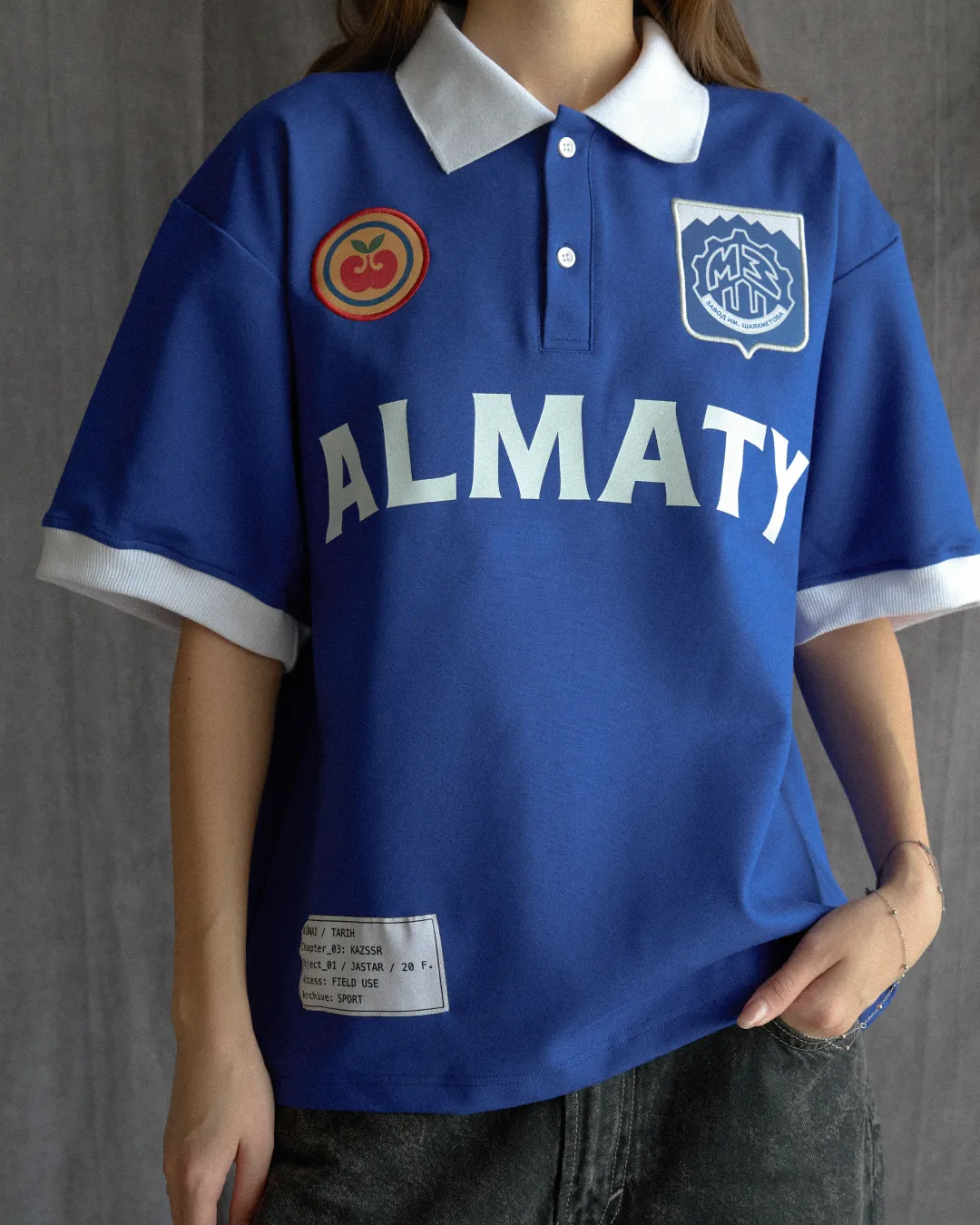
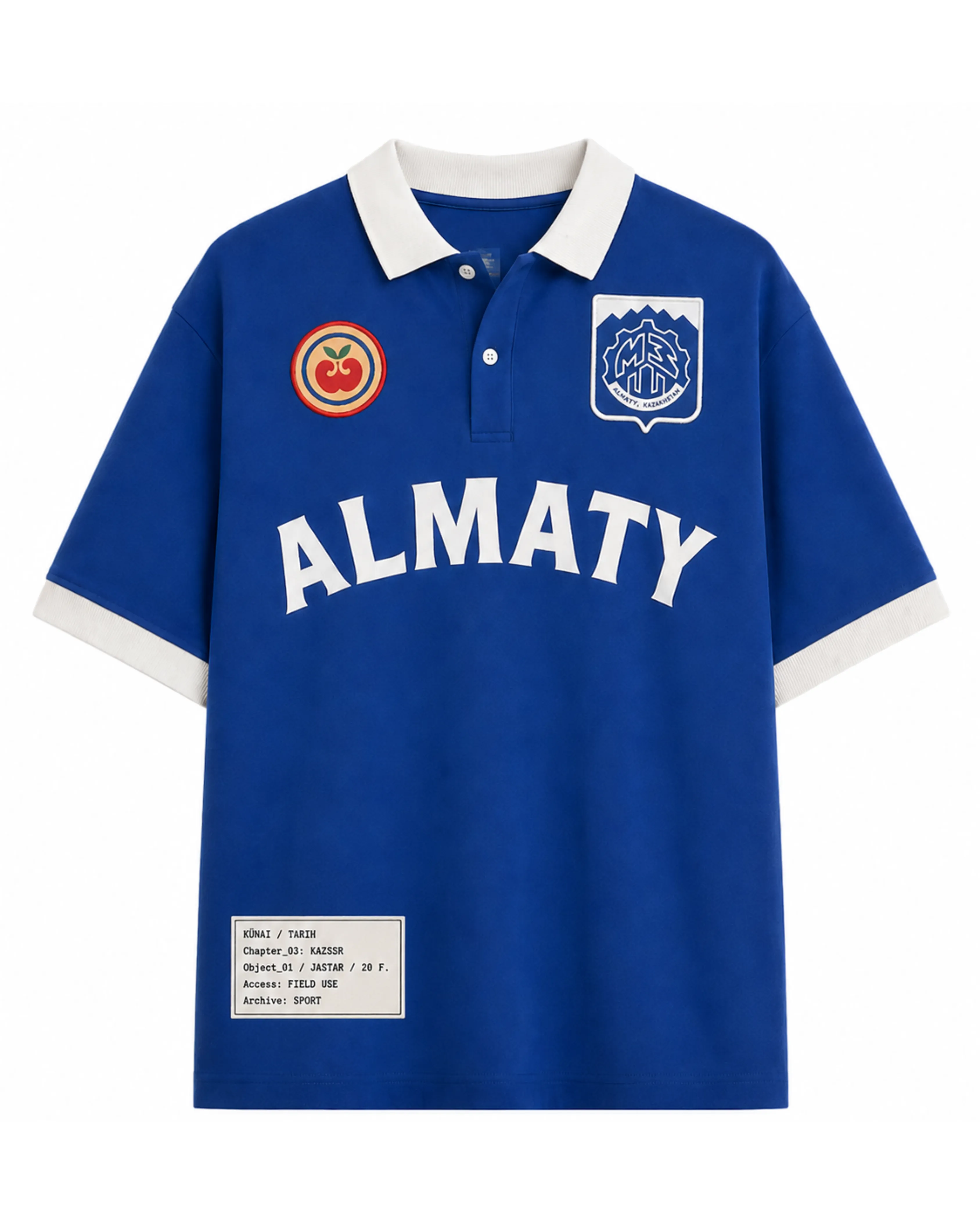
The year 1959, the founding of the Kazakh SSR Football Federation, is a landmark threshold: from this moment Kazakhstan football enters the all-union system as an independent subject. «Kairat», founded five years earlier, in 1954, as «Lokomotiv Alma-Ata», becomes the flagship and for decades remains the only representative of the Kazakh SSR in the Higher League of Soviet football. Shayakhmetov, in the context of Jastar, is not an incidental figure: Zhumabai Shayakhmetov was the first ethnic Kazakh in the post of First Secretary of the Central Committee of the Communist Party of the Kazakh SSR (1946–1954) and one of only three Kazakhs to head the republic across the entire Soviet period, alongside Kunaev and Nazarbayev.
Interpretation
Qurama is drawn from the USSR national team. It is a visualization of how the kit of a Kazakh SSR national team might have looked, had it been a sovereign republic, while preserving the full aesthetic of the era. We took the color palette of the historical kit and filled it with Kazakh elements: the date 1959 as a symbol of the start of official Kazakhstan football, a Kazakh star ornament on the chest in place of the Soviet star, and a reworked football federation logo on the other side.
Object
National kit 1959 «Q U R A M A». An ivory shirt with a red collar and red cuffs. On the chest a large КССР inscription is placed in red. On the left, an embroidered coat of arms of the Kazakh SSR football federation, created by us. In the middle, 1959, the year the КССР football federation was created. The star on the right side of the shirt is a Kazakh ornament in the form of a star. Since we present an alternative image of an independent Soviet Kazakhstan, the traditional communist symbol, the star, is here interpreted through the lens of Kazakh ornament.
The design is executed in the style of early sports kits: contrasting trim on the collar and sleeves, a large republic abbreviation, and state symbols. The composition rests on the visual language of Soviet sports kit of the late 1950s.